

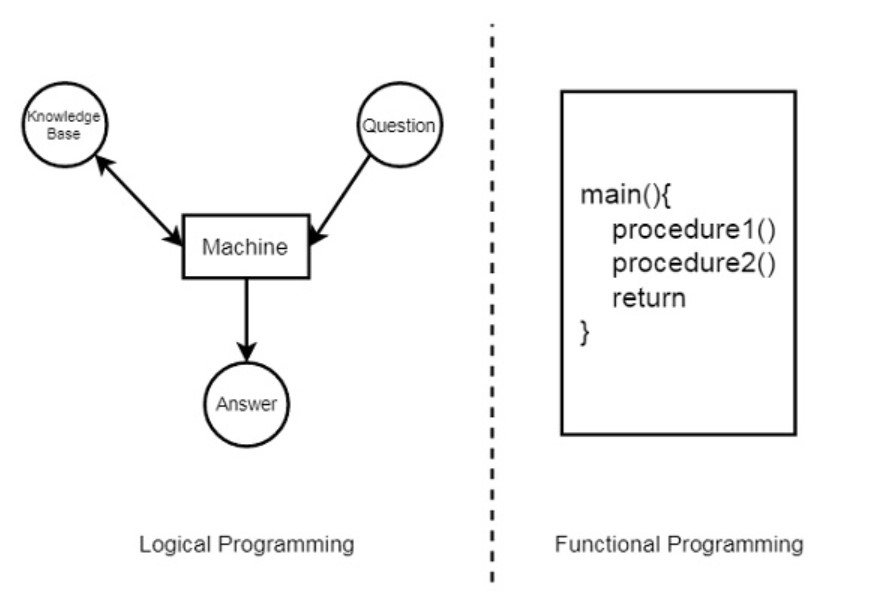
Most programming styles ask you to describe how a computer should perform a task step by step. Logic programming takes a different path. It focuses on describing what is true about a problem, and then lets an inference engine figure out how to reach answers. This approach is especially useful when problems involve constraints, relationships, and search, such as scheduling, configuration, diagnosis, and knowledge-based reasoning. Logic programming remains relevant today because many modern AI systems still depend on structured reasoning, explainability, and the ability to express domain knowledge cleanly. Learners exploring this topic through an ai course in bangalore often discover that logic programming is less about writing procedures and more about modelling reality precisely.
Understanding the Core Idea: Programs as Logical Statements
Logic programs are built from declarative statements. Instead of writing loops and conditionals to control execution, you write facts and rules that capture relationships.
Facts
Facts state information that is considered true in the program’s world. For example, a fact might express that “Alice is a parent of Bob.” Facts are simple and grounded.
Rules
Rules define how new truths can be derived. A rule might say: “If X is a parent of Y, then X is an ancestor of Y.” Rules can chain together, allowing complex relationships to be inferred from basic facts.
Queries
A query is a question asked of the system, such as “Who is an ancestor of Bob?” The logic engine searches through facts and rules to determine valid answers.
The key difference is that you do not explicitly instruct the engine how to search. The engine uses a built-in reasoning method to prove whether the query can be satisfied based on the given logical sentences.
How Inference Works: Unification and Backtracking
Logic programming systems, such as Prologue, rely on two important mechanisms: unification and backtracking.
Unification
Unification is a pattern-matching process that tries to make two logical expressions consistent by finding suitable variable bindings. If a query includes variables, unification finds values that satisfy the relationships defined by rules and facts.
For example, if a rule says parent(X, Y) and the query asks parent(alice, Y), unification binds X = alice and attempts to find values for Y that make the statement true.
Backtracking
Backtracking is the search strategy used when multiple possibilities exist. If the engine tries one path and it fails, it automatically returns to the last decision point and tries an alternative. This makes logic programming powerful for exploring solution spaces, such as puzzles, constraint satisfaction problems, and route planning.
However, backtracking also means performance can vary depending on rule design, data size, and query structure. Skilled logic programming involves writing rules that guide search efficiently.
Where Logic Programming Shines: Constraints, Knowledge, and Explanation
Logic programming is especially strong in domains where relationships matter more than procedures.
Constraint-based problem solving
Problems like assigning staff to shifts or scheduling tasks with dependencies can be expressed naturally as constraints. You model the rules of the system and ask the engine to find solutions that satisfy them. Constraint Logic Programming (CLP) extends the basic model by adding specialised constraint solvers for numbers and other domains.
Knowledge representation
Logic programming is well-suited for representing structured knowledge. This is why it appears in expert systems and rule-based reasoning tools. A domain expert can encode rules, and the system can infer conclusions from them.
Explainable reasoning
Because solutions are derived through explicit rules, it is often easier to explain why a result was produced. This is valuable when systems need transparency, auditing, or human trust, such as compliance checks or decision support tools.
Many people first connect these benefits to AI when studying reasoning approaches in an ai course in bangalore, where logic-based methods are presented as complements to data-driven machine learning.
Logic Programming vs. Imperative and Functional Styles
Logic programming is not a replacement for every programming paradigm. It is a strong fit for certain categories of problems.
- Imperative programming excels at precise control of execution, performance tuning, and low-level operations.
- Functional programming shines in transformations of data, immutability, and predictable behaviour.
- Logic programming is best when you want to model a domain using relationships and constraints, and let the engine explore valid solutions.
In practice, many modern systems combine paradigms. For example, a logic engine might handle complex rule evaluation, while a traditional language manages system integration, data pipelines, and user-facing services.
Practical Considerations for Using Logic Programming
Logic programming requires careful thinking about how rules interact.
- Rule ordering can affect performance because it influences search paths.
- Recursion is common and must be written safely to avoid infinite loops.
- Large datasets can require indexing or hybrid approaches to remain efficient.
- Debugging involves understanding inference chains rather than stepping through procedures.
Despite these considerations, the reward is a clean, high-level way to represent complex reasoning in a format that closely matches how humans describe rules and relationships.
Conclusion
Logic programming offers a distinctive way to build software by expressing facts and rules in logical form and letting inference produce solutions. Its strengths in constraint solving, knowledge modelling, and explainable reasoning keep it relevant, even as machine learning dominates many AI applications. For problems where relationships and constraints define the challenge, logic programming remains one of the most elegant tools available. Whether you are exploring AI foundations or building rule-driven systems, understanding this paradigm adds depth to your problem-solving toolkit and expands the range of solutions you can design.
