

Many organisational problems look simple at first glance, but become difficult the moment people start describing them. One stakeholder calls it a “process issue,” another sees it as a “culture problem,” and someone else believes technology is the answer. In these situations, jumping straight to requirements or solutions often creates more confusion. Soft Systems Methodology (SSM) was designed for this exact reality. It is a structured approach for making sense of complex, ill-defined human activity systems, where multiple viewpoints, unclear boundaries, and competing priorities shape the problem itself. Instead of forcing a single “correct” definition, SSM helps teams explore perspectives, model purposeful activity, and arrive at root definitions that are practical and shared.
Why SSM Matters for Ill-Defined, People-Centred Problems
Traditional analysis methods work well when the problem is clearly stated and the success measures are agreed upon. Many real business challenges do not fit that pattern. For example, improving customer experience across departments or reducing cycle time in a process that spans multiple teams often involves politics, habits, incentives, and informal workarounds.
SSM treats these as human systems rather than technical systems. It acknowledges that perceptions differ and that each perception may be valid from a specific role’s viewpoint. The objective is not to “win” a debate about what the problem is. The objective is to create a shared understanding that can support realistic action.
This is why SSM is particularly useful for business analysts working in transformation, operations, and service design contexts. Learners exploring structured problem framing often encounter SSM through a business analyst course in chennai, because it offers a disciplined way to handle ambiguity without oversimplifying people-driven realities.
The SSM Workflow: From Messy Situations to Structured Insight
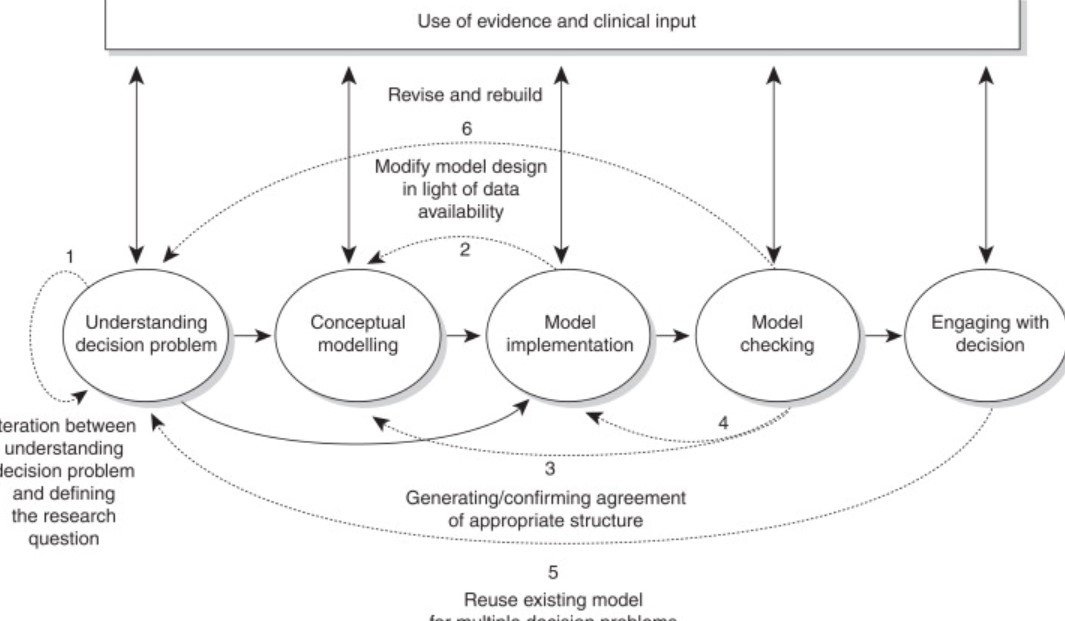
SSM is commonly described as an iterative learning cycle rather than a linear checklist. However, most applications follow a practical flow.
Understanding the problem situation
SSM starts by exploring the “problem situation” as it is experienced. This includes interviews, observations, workshops, and reviewing existing documents. The goal is to capture tensions, expectations, and constraints without immediately narrowing the scope. Instead of asking only “what is broken,” SSM also asks “who experiences it,” “why it matters,” and “what would improvement look like from different viewpoints.”
Rich pictures as a thinking tool
A well-known SSM technique is the rich picture, a visual sketch that captures actors, relationships, information flows, conflicts, and external pressures. It is not an artistic deliverable. It is a thinking device that helps teams see the whole situation, including informal influences like power dynamics and communication breakdowns. In practice, rich pictures surface hidden assumptions faster than long textual notes.
Building purposeful activity models
Once the situation is explored, SSM creates conceptual models of purposeful activity. These models do not represent the real world exactly. Instead, they represent “what the system would need to do” to achieve a particular purpose. This helps separate the idea of “how things currently work” from “how things could work if we agreed on purpose and boundaries.”
Root Definitions and CATWOE: Getting to the Heart of the System
A central output of SSM is the root definition, a concise statement describing a system of purposeful activity. Root definitions are powerful because they force clarity on purpose, actors, and transformation. They answer: what is being transformed, who benefits, who controls it, and what constraints exist.
To build strong root definitions, SSM often uses CATWOE:
- Customers: Who benefits or is affected by the transformation?
- Actors: Who perform the activities?
- Transformation: What input is transformed into what output?
- Worldview: What belief makes this system meaningful?
- Owner: Who can stop or change the system?
- Environment: What external constraints must be respected?
CATWOE prevents vague problem statements like “improve efficiency” by forcing specific thinking. For example, “improve onboarding” becomes a transformation statement with clear actors, customers, and constraints. This structured clarity is a key reason SSM is valued in analysis practice and is commonly discussed in a business analyst course in chennai that emphasises stakeholder-aligned discovery.
Comparing Models With Reality and Identifying Feasible Changes
After conceptual models are built, SSM compares them with the real situation. This is not a compliance audit. It is a learning conversation. Teams identify gaps, contradictions, and opportunities. Some activities in the model may already exist but are poorly executed. Others may not exist at all. The discussion then shifts to desirable, feasible changes.
This is where SSM becomes practical. It does not stop at insights. It drives toward action by helping teams agree on interventions that fit organisational realities. Changes might include redefining responsibilities, adjusting governance, improving communication paths, revising performance measures, or introducing targeted technology support. Importantly, SSM encourages incremental change where needed, because forcing a “perfect” design into a human system often fails.
Conclusion
Soft Systems Methodology offers a reliable way to structure messy, people-centric problems where traditional analysis methods struggle. By exploring multiple perspectives, using rich pictures, building purposeful activity models, and deriving root definitions through CATWOE, SSM helps teams move from confusion to shared clarity. Most importantly, it supports realistic change by focusing on what is both desirable and feasible in a real organisation. For business analysts working in complex environments, SSM is not just a technique. It is a disciplined mindset for turning ambiguity into actionable understanding.
